In today’s digital business environment, companies rely on multiple applications to manage customers, operations, sales, finance, communication, and data. When these systems work separately, employees often have to enter the same information multiple times, switch between platforms, and deal with unnecessary delays. Application Integration in USA helps businesses connect these different systems so they can work together more efficiently.
Application integration is the process of connecting two or more software applications so that they can share data and communicate with each other. Instead of keeping information trapped inside individual platforms, integration creates a connected technology environment where data can move between systems automatically.
Why Application Integration Matters for US Businesses
Businesses in the USA operate in a highly competitive market where speed and efficiency can have a direct impact on growth. Disconnected applications can make it difficult for teams to access accurate information when they need it.
For example, an online retailer may use one system for its website, another for inventory, a separate CRM for customer information, and accounting software for financial records. Without integration, employees may need to manually transfer information between these platforms. This takes time and increases the possibility of errors.
With the right application integration strategy, these systems can exchange information automatically. A new customer order, for instance, can update inventory, notify the fulfillment team, record customer information, and send relevant data to accounting without requiring several manual steps.
Key Benefits of Application Integration
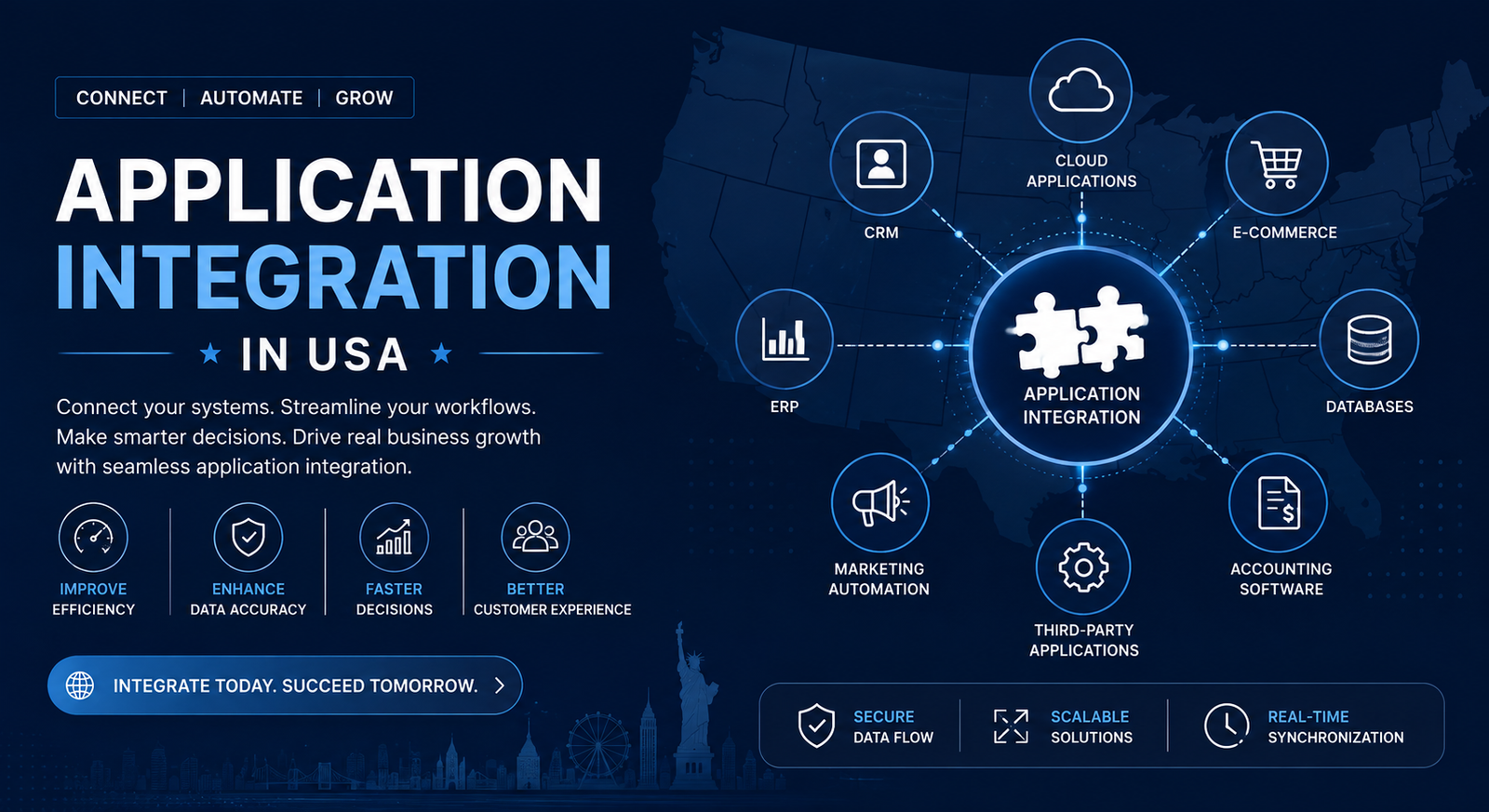
One of the biggest advantages of application integration is better productivity. Employees spend less time performing repetitive data-entry tasks and more time focusing on work that contributes to business growth.
Integration can also improve data accuracy. When information is automatically transferred between connected applications, businesses can reduce duplicate records and manual input errors.
Another important benefit is faster decision-making. When teams can access updated information from connected systems, managers have a clearer view of business performance and can respond to changing customer or market needs more quickly.
Application integration can also improve the customer experience. Connected systems allow businesses to provide faster responses, maintain consistent customer information, and create smoother processes across sales, support, and service teams.
Common Application Integration Solutions
The right integration approach depends on the company’s applications, business requirements, and existing technology infrastructure. Businesses may integrate CRM platforms, ERP systems, accounting software, e-commerce applications, marketing tools, databases, cloud applications, and internal business systems.
APIs are commonly used to allow applications to communicate and exchange information. Middleware and integration platforms can also help connect multiple applications while managing data flow between them.
Choosing an Application Integration Partner
Selecting an experienced technology partner is important when implementing an integration project. A reliable provider should understand your existing systems, identify integration requirements, address security considerations, and develop a solution that can scale as your business grows.
For companies looking for Application Integration in USA, the goal should not simply be to connect software. A successful integration strategy should create a more connected, efficient, and scalable digital environment.
As businesses continue adopting cloud platforms, automation, AI tools, and specialized applications, effective integration will become increasingly important. Connecting the right systems today can help US businesses reduce operational friction, improve productivity, and build a stronger foundation for future growth.